
The law hub

Impact of Unilateral v. Multilateral Sanctions in International Law

By Ayodele Samuel Adepitan PhD (In-View), LLM The distinction between unilateral and multilateral sanctions is central to assessing both their legality and their impact on international trade. While both forms of sanctions restrict economic activity, their legal foundations and systemic implications differ significantly. Multilateral sanctions, particularly those authorised by the United Nations Security Council under Chapter VII of the Charter, derive legitimacy from collective decision-making. Their binding character under Articles 25 and 41 reflects the shared responsibility of member states to maintain international peace and security. In legal terms, multilateral sanctions are generally viewed as more consistent with the principles of sovereign equality and collective enforcement. Their collective nature reduces the perception of selective or politically motivated economic coercion. Unilateral sanctions, by contrast, are imposed by individual states through domestic legislation or executive authority. These measures are often justified on grounds of national security, foreign policy interests, or the promotion of human rights. Although states possess the sovereign right to regulate their external economic relations, unilateral sanctions may raise concerns where they have extraterritorial reach or affect third-party states. The prohibition of intervention in the internal affairs of states, reflected in customary international law and the UN Charter, forms part of the legal background against which such measures are evaluated. From a trade perspective, unilateral sanctions are more likely to lead to fragmentation of the international economic system. Unlike multilateral sanctions, which are broadly coordinated, unilateral measures may create asymmetrical restrictions that distort competitive conditions. Companies operating in sanctioning states may be prohibited from engaging in certain transactions, while firms in non-participating states may continue trade. This uneven application can shift market share, reorient supply chains, and encourage the development of alternative economic alliances. Extraterritorial sanctions intensify these effects. Where domestic sanctions laws extend to foreign entities conducting transactions in a dominant currency or through specific financial systems, third states may experience indirect pressure to comply. This has generated diplomatic tensions and, in some cases, legislative responses aimed at countering foreign sanctions. The legal debate surrounding extraterritorial sanctions centres on whether such measures exceed permissible jurisdictional limits under international law. Multilateral sanctions, while generally more legitimate in formal legal terms, are not immune from economic consequences. Coordinated trade embargoes can produce significant global market effects, particularly where they involve major exporting states or strategic commodities. However, because they operate through collective frameworks, their implementation may be more predictable and less likely to generate jurisdictional disputes. The contrast between unilateral and multilateral sanctions, therefore, extends beyond formal legality. It influences trade predictability, market fragmentation, and perceptions of fairness within the international economic order. While both forms of sanctions may pursue legitimate objectives, unilateral measures are more likely to generate systemic tension within trade and financial systems due to their selective application and potential extraterritorial impact. Understanding this distinction is essential to evaluating the broader implications of economic sanctions. The legal authority underpinning a sanctions regime shapes not only its legitimacy but also its economic reach and its compatibility with multilateral trade commitments.


By Ayodele Samuel Adepitan PhD (In-View), LLM

The distinction between unilateral and multilateral sanctions is central to assessing both their legality and their impact on international trade. While both forms of sanctions restrict economic activity, their legal foundations and systemic implications differ significantly.

Multilateral sanctions, particularly those authorised by the United Nations Security Council under Chapter VII of the Charter, derive legitimacy from collective decision-making. Their binding character under Articles 25 and 41 reflects the shared responsibility of member states to maintain international peace and security. In legal terms, multilateral sanctions are generally viewed as more consistent with the principles of sovereign equality and collective enforcement. Their collective nature reduces the perception of selective or politically motivated economic coercion.

Unilateral sanctions, by contrast, are imposed by individual states through domestic legislation or executive authority. These measures are often justified on grounds of national security, foreign policy interests, or the promotion of human rights. Although states possess the sovereign right to regulate their external economic relations, unilateral sanctions may raise concerns where they have extraterritorial reach or affect third-party states. The prohibition of intervention in the internal affairs of states, reflected in customary international law and the UN Charter, forms part of the legal background against which such measures are evaluated.

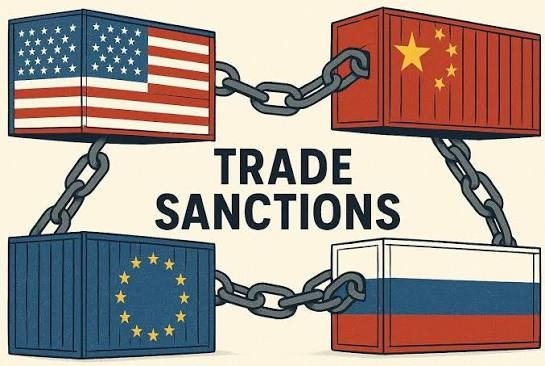
From a trade perspective, unilateral sanctions are more likely to lead to fragmentation of the international economic system. Unlike multilateral sanctions, which are broadly coordinated, unilateral measures may create asymmetrical restrictions that distort competitive conditions. Companies operating in sanctioning states may be prohibited from engaging in certain transactions, while firms in non-participating states may continue trade. This uneven application can shift market share, reorient supply chains, and encourage the development of alternative economic alliances.

Extraterritorial sanctions intensify these effects. Where domestic sanctions laws extend to foreign entities conducting transactions in a dominant currency or through specific financial systems, third states may experience indirect pressure to comply. This has generated diplomatic tensions and, in some cases, legislative responses aimed at countering foreign sanctions. The legal debate surrounding extraterritorial sanctions centres on whether such measures exceed permissible jurisdictional limits under international law.

Multilateral sanctions, while generally more legitimate in formal legal terms, are not immune from economic consequences. Coordinated trade embargoes can produce significant global market effects, particularly where they involve major exporting states or strategic commodities. However, because they operate through collective frameworks, their implementation may be more predictable and less likely to generate jurisdictional disputes.

The contrast between unilateral and multilateral sanctions, therefore, extends beyond formal legality. It influences trade predictability, market fragmentation, and perceptions of fairness within the international economic order. While both forms of sanctions may pursue legitimate objectives, unilateral measures are more likely to generate systemic tension within trade and financial systems due to their selective application and potential extraterritorial impact.

Understanding this distinction is essential to evaluating the broader implications of economic sanctions. The legal authority underpinning a sanctions regime shapes not only its legitimacy but also its economic reach and its compatibility with multilateral trade commitments.

Leave a Comment

Your email address will not be published. Required fields are marked *

Scroll to Top